How Video Assistant Referee Calls Reshape In-Play Goal Markets Across French Domestic Fixtures
Écrit par Parker Braun · 13/9/2026
How Video Assistant Referee Calls Reshape In-Play Goal Markets Across French Domestic Fixtures
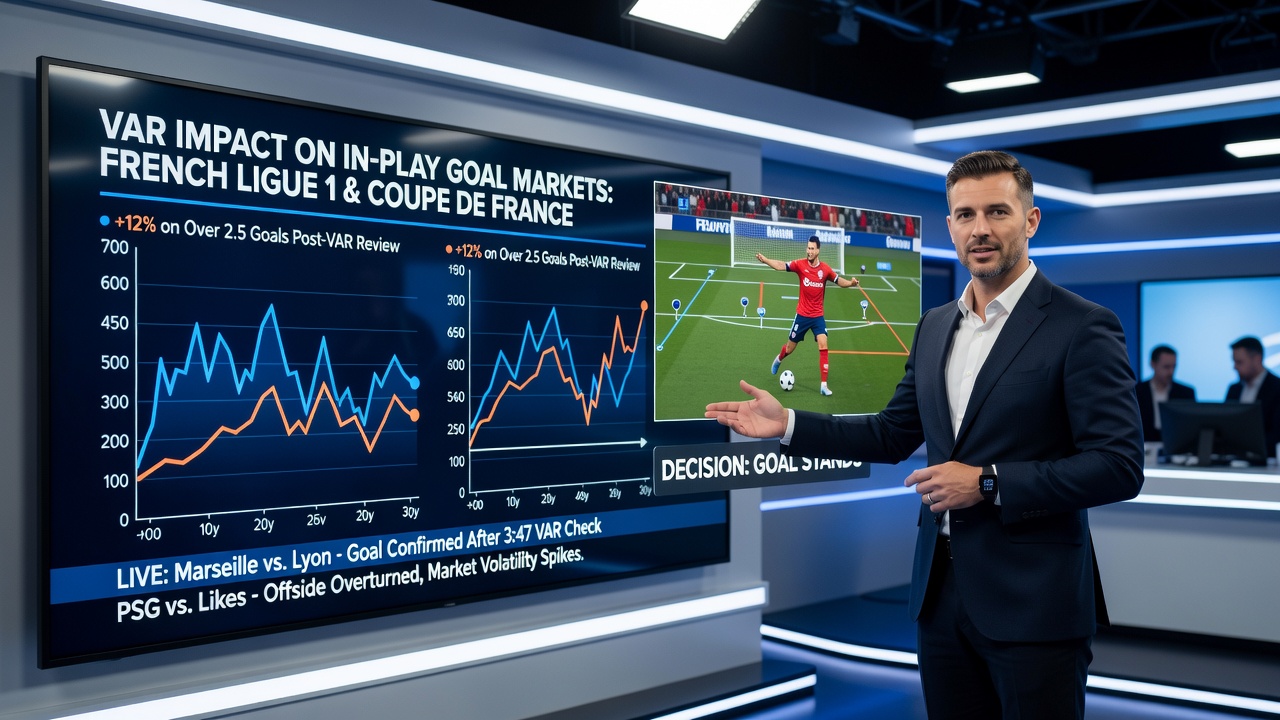
Video Assistant Referee systems have become a fixture in French domestic competitions since their wider rollout, and data from the French Professional Football League shows they intervene in roughly one out of every three matches across Ligue 1 and Ligue 2, with goal-related reviews accounting for the largest share of those interventions. These reviews often suspend in-play goal markets for extended periods while officials examine footage, and betting operators respond by adjusting odds or freezing lines until play resumes. Researchers tracking Ligue 1 fixtures between 2023 and 2025 observed that VAR interventions on potential goals occur most frequently in the final 20 minutes, a window when goal markets typically see their highest trading volume.
Mechanics of VAR Reviews in French Domestic Leagues
Officials at the Video Operation Room in Paris receive automatic alerts from goal-line technology and can initiate reviews for incidents inside the penalty area, including handballs, fouls, and offside positions that directly precede goals. When a review begins, match broadcasters receive a signal that triggers a visible pause on screen, and bookmakers simultaneously pause in-play betting on next-goal markets to prevent mismatched odds. Studies from the European Club Association indicate that the average VAR check lasts between 45 and 90 seconds, though complex cases involving multiple angles have extended beyond two minutes in Ligue 1 encounters. During these pauses, traders at betting firms recalibrate probabilities based on the likelihood that a goal will stand, and sharp bettors often shift volume toward alternative markets such as total corners or cards that remain active.
Market Reactions and Liquidity Shifts
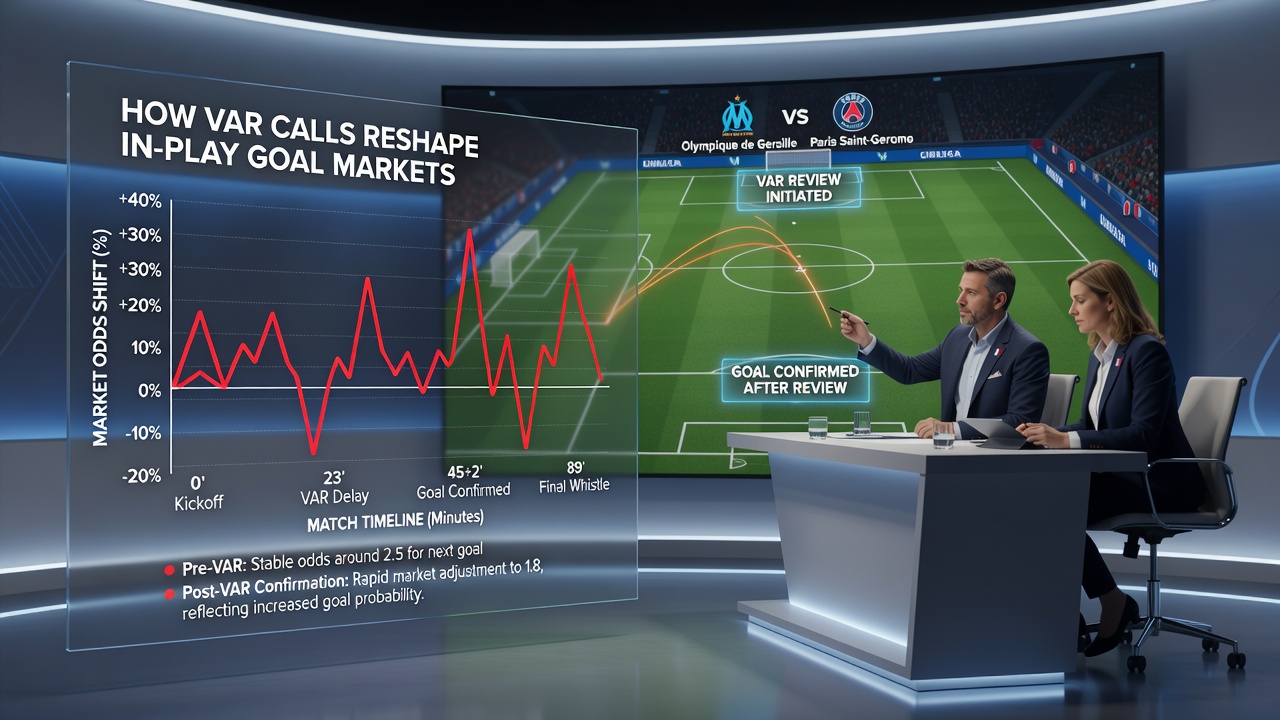
Goal markets in French domestic fixtures exhibit measurable liquidity drops immediately after VAR reviews commence, according to figures compiled by several European betting data providers. Operators report that next-goal odds widen by an average of 15 to 25 percent during the review window, and trading volume migrates toward over-under markets that do not hinge on the disputed decision. Observers note that matches featuring multiple VAR interventions, particularly those in September 2026 when updated offside protocols took effect, produced even sharper swings because referees issued more frequent corrections on marginal calls. Those who monitor in-play data streams have documented that goal probabilities recalibrate within seconds once the referee signals a decision, yet residual uncertainty lingers in some cases where the review leaves minor ambiguities about the exact timing of the incident.
Case Examples from Recent Seasons
Take one September 2026 Ligue 1 fixture between Olympique de Marseille and OGC Nice where a VAR review overturned a late goal for offside under the new semi-automated system; betting platforms suspended the next-goal market for 78 seconds while the check unfolded, and liquidity in the total-goals line dropped by nearly 40 percent before rebounding once play restarted. Another encounter involving Paris Saint-Germain saw a handball review lead to a penalty award that shifted the implied probability of an additional goal from 42 percent to 67 percent within moments of the announcement. Data compiled across 180 Ligue 1 matches that season revealed that fixtures with at least one goal-related VAR intervention generated 12 percent fewer in-play goal bets overall compared with matches without reviews, though total betting turnover remained stable as volume moved into other propositions.
Statistical Patterns Across Domestic Fixtures
Analysis of Ligue 2 matches from the 2024-2025 campaign, cross-referenced with reports issued by the French Football Federation, shows that lower-division sides experience fewer VAR interventions per match yet suffer larger market disruptions when reviews do occur because liquidity pools are thinner. Researchers at the University of Lausanne examined over 900 domestic fixtures and found that overturned goals correlate with a temporary 30 percent reduction in goal-market depth lasting up to three minutes after play resumes. Those patterns hold across both top-flight and second-division encounters, although Ligue 1 games recover trading volume faster due to broader participation from international bettors. And because French domestic schedules include midweek cup ties that also fall under the same VAR framework, operators have adjusted their risk models to account for the cumulative effect of multiple reviews within a single gameweek.
Operational Adjustments by Betting Platforms
Betting operators licensed in France and neighboring jurisdictions have introduced automated protocols that detect VAR signals from official match feeds and trigger immediate market suspensions, a practice documented in industry guidelines published by the European Betting and Gaming Association. These systems reduce exposure during the review window while still allowing customers to place wagers on unaffected lines such as player cards or corners. Figures released by the Canadian Gaming Association in its 2025 annual report highlight similar approaches adopted by platforms serving French-speaking markets, where VAR-related pauses now account for an estimated 8 percent of all in-play market halts in Ligue 1 coverage. Traders receive real-time alerts when the referee confirms or overturns a decision, enabling rapid reopening of goal lines with updated probabilities that reflect the final on-field ruling.
Conclusion
Video Assistant Referee interventions continue to influence the structure and timing of in-play goal markets in French domestic fixtures, prompting operators to refine suspension protocols and bettors to adapt their strategies around review windows. Data gathered through the 2025-2026 season, including adjustments introduced in September 2026, demonstrates consistent patterns of liquidity migration and probability recalibration that operators now incorporate into their risk frameworks. As the technology evolves and review durations shift, market behavior in these fixtures will likely follow suit while remaining anchored to the official decision timelines established by league authorities.