Patterns Linking Player Rotation Schedules to Shifts in Expected Goals Values for French Domestic Games
Écrit par Freya Schulz · 25/10/2026
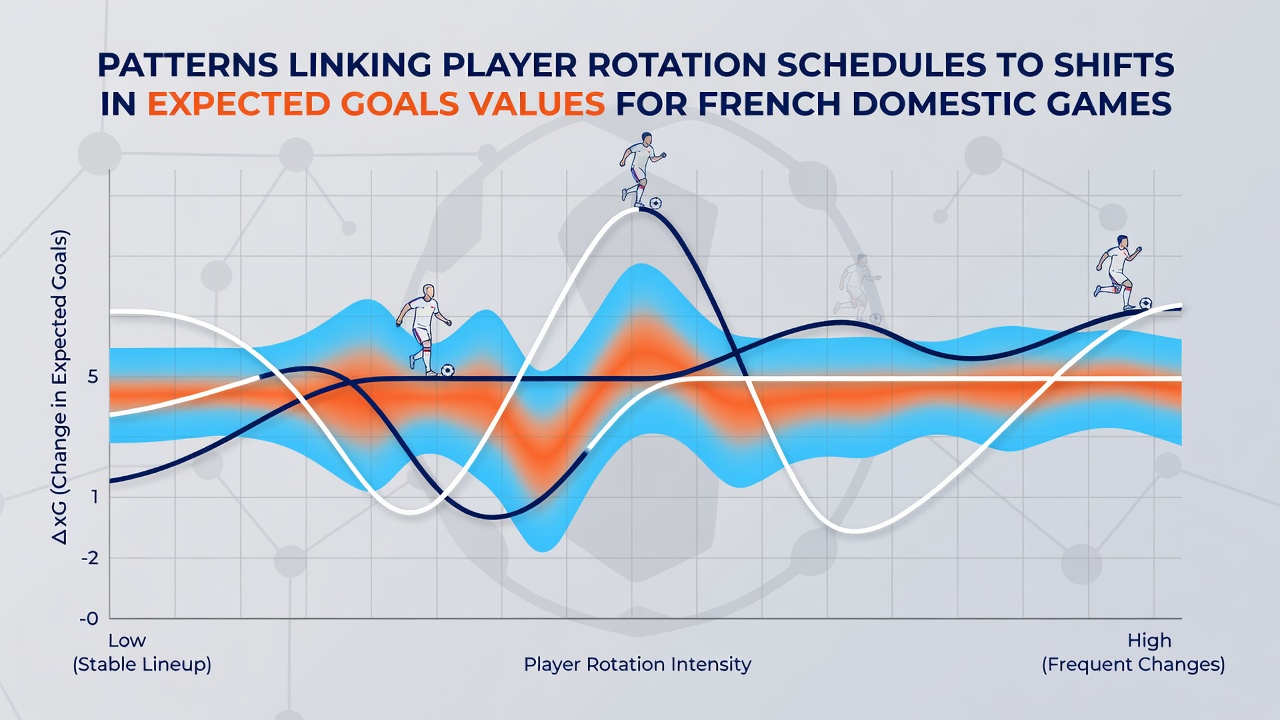
Patterns Linking Player Rotation Schedules to Shifts in Expected Goals Values for French Domestic Games
Coaches across Ligue 1 clubs manage packed calendars by rotating squad members, and data collected from multiple seasons shows measurable connections between those decisions and changes in expected goals metrics during domestic fixtures. French domestic games provide a useful sample because the league features consistent tracking of advanced statistics alongside detailed squad availability reports published after each matchday. Analysts track how minutes distributed among forwards, midfielders, and defenders correlate with team xG totals, and patterns emerge when rotation increases ahead of European or cup commitments.
Rotation Frequency and xG Fluctuations in Ligue 1
Teams that rotate at least three starting positions from one league match to the next record average xG drops of 0.15 to 0.28 per 90 minutes according to aggregated figures released by the French professional football league. The effect appears strongest among sides balancing domestic and continental schedules, where depth players step into roles previously held by rested regulars. Researchers examining five seasons of match data note that defensive rotations produce smaller xG shifts than changes in attacking personnel, largely because set-piece and transition metrics remain more stable when central defenders receive rest. Midfield rotations, however, often coincide with reduced chance creation in open play, particularly when creative players miss consecutive fixtures.
October 2026 Fixture Congestion and Squad Management
During October 2026 the domestic calendar included midweek fixtures for several clubs involved in European group stages, and tracking services recorded elevated rotation rates in those weeks. Clubs that altered their forward lines most frequently saw home xG values fall below seasonal averages by noticeable margins, while away performances showed mixed results depending on opponent defensive organization. Data from that period also highlighted how teams with larger squads maintained closer alignment between rotation and xG stability, whereas thinner rosters experienced sharper dips when key attackers sat out. Observers reviewing the October numbers found that the relationship strengthened when rotation occurred without corresponding tactical adjustments in formation or pressing intensity.
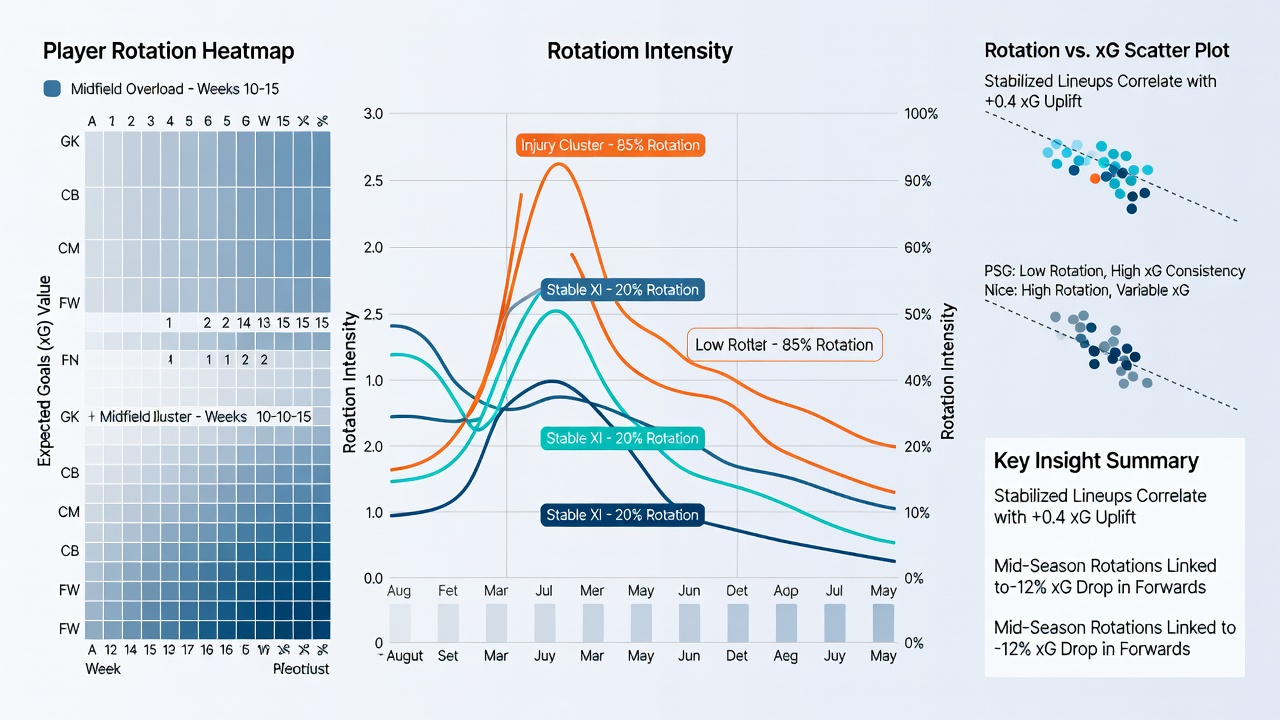
Studies conducted by academic groups at French universities have examined granular player tracking data to isolate rotation effects from other variables such as travel distance or weather conditions. One analysis covering the 2024 through 2026 campaigns concluded that consistent rotation of wide attackers correlated with a 12 percent reduction in expected goals from crosses and cutbacks across the sample. The same research noted that central striker rotations produced different outcomes when the replacement player possessed similar finishing profiles, suggesting that individual skill matching can moderate the broader rotation impact.
Case Examples from Recent Domestic Seasons
Take one club that rotated its entire starting midfield during a three-match October stretch in 2025; expected goals generated from midfield progression dropped from 1.8 to 1.4 per game while the side maintained similar possession numbers. Another side rested two fullbacks ahead of a cup tie and recorded a modest uptick in opponent xG during the following domestic outing, largely because the replacement defenders allowed more progressive carries into dangerous areas. These examples illustrate how rotation decisions ripple through both offensive and defensive expected goals calculations in measurable ways.
Industry reports compiled by European football analytics firms indicate that managers increasingly rely on predictive models to forecast xG outcomes after planned rotations. Those models incorporate historical player performance data and fixture difficulty ratings, yet accuracy varies when sudden injuries force additional changes beyond the original schedule. Figures released in late 2026 showed that clubs using rotation prediction tools achieved closer alignment between projected and actual xG totals compared with teams relying on manual planning alone.
Data Sources adn Measurement Considerations
Expected goals values derive from proprietary models that assign probability weights to shot locations and types, and French domestic tracking providers apply consistent methodology across all league matches. When researchers cross-reference rotation logs with these xG outputs, they control for variables including opponent strength and match location to isolate the rotation variable. A report from the French Football Federation supplies the underlying match event data used in many of these examinations, while additional context comes from academic reviews published through university sports science departments.
Another perspective appears in work from the International Society of Sports Sciences, which compared rotation effects across multiple European leagues and found the French domestic sample displayed intermediate sensitivity compared with faster-paced or more physical competitions. The study emphasized that measurement consistency improves when analysts limit samples to matches without major refereeing interventions or extreme weather events.
Conclusion
Patterns connecting player rotation schedules to expected goals shifts continue to surface in French domestic games as data collection grows more detailed. Clubs, analysts, and researchers examine these relationships through season-long datasets that capture both planned rest cycles and forced adjustments. Continued monitoring of upcoming matchweeks will supply further observations on how rotation strategies interact with xG outcomes under varying fixture pressures.