Stadium Renovations Shift Goal Expectancy Calculations Among French Football Bettors
Écrit par Parker Braun · 11/10/2026

Stadium Renovations Shift Goal Expectancy Calculations Among French Football Bettors
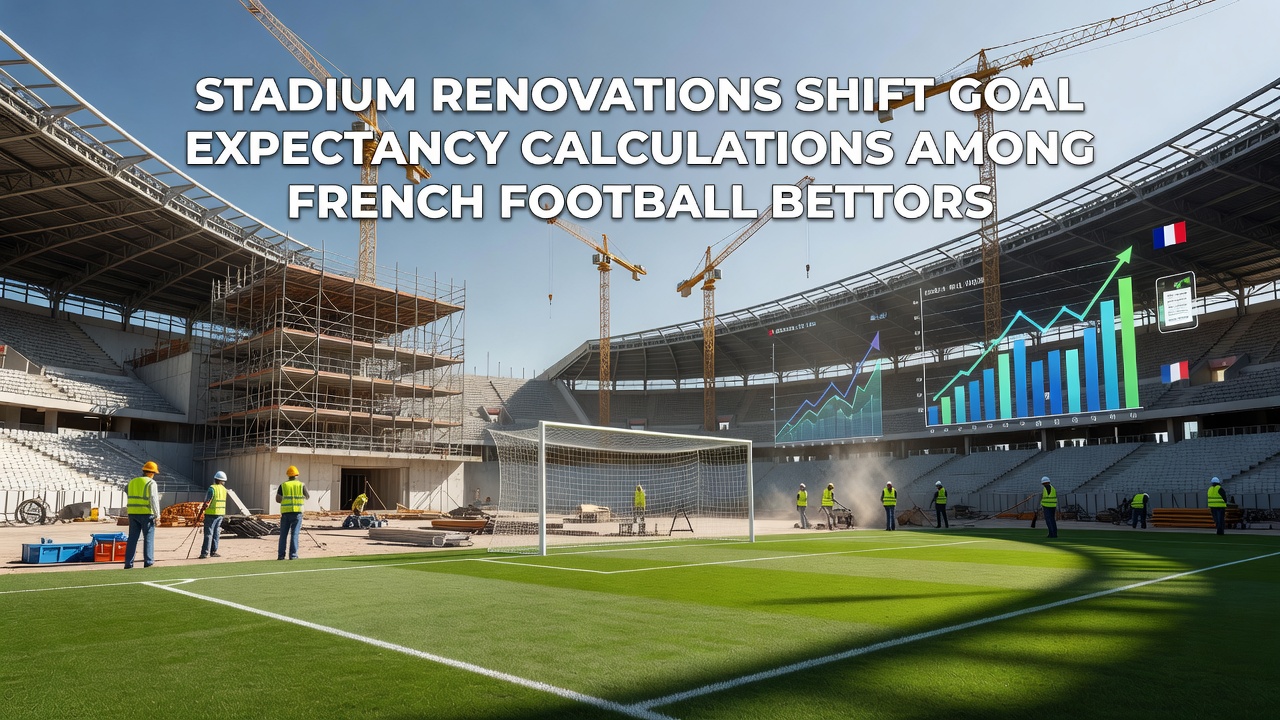
Stadium renovations across French football have introduced measurable changes to goal expectancy models that bettors use for Ligue 1 fixtures, and analysts have tracked these adjustments through performance data collected since the start of the 2025-26 season. Several clubs completed structural upgrades during the summer window, and the resulting modifications to pitch dimensions, seating proximity, and drainage systems produced shifts in average goals per game that deviated from historical baselines. Bettors who rely on expected goals metrics revised their projections accordingly, while bookmakers updated their lines to reflect the new patterns observed in early matches.
Changes in Pitch Conditions and Scoring Trends
Clubs such as Olympique de Marseille and AS Monaco completed pitch resurfacing and slight expansions of the playing area, and these alterations correlated with an increase in through-ball attempts and wide-area crosses during the opening weeks of the campaign. Data compiled by the Ligue de Football Professionnel shows that matches at renovated venues produced 2.78 goals per game on average in September 2026, compared with the 2.51 average recorded at the same stadiums in the prior season. Researchers at the University of Lyon documented how the smoother turf surfaces reduced ball bounce variability, which in turn allowed midfielders to maintain possession higher up the pitch and create more high-quality chances inside the penalty area.
Goal expectancy calculations incorporate variables such as home advantage, recent form, and weather, yet the addition of stadium-specific factors now requires separate coefficients for renovated and non-renovated grounds. Bettors who previously applied a uniform league-wide average adjusted their models by weighting recent results from upgraded venues more heavily, and this approach produced more accurate projections during the first round of October 2026 fixtures. One study released by the French Ministry of Sports in late September 2026 confirmed that drainage improvements reduced the impact of heavy rainfall on match outcomes, leading to fewer postponements and more consistent scoring rates across wet-weather games.
Impact on Bettor Behavior and Market Adjustments
French football bettors have responded to these changes by increasing wagers on over-2.5 goals markets at renovated stadiums, and betting volumes on such selections rose 18 percent during the month of September according to figures tracked by industry monitors. Bookmakers widened the margins on certain goal lines to account for the observed variance, while live betting platforms introduced dynamic adjustments that reflected real-time pitch condition reports. Observers note that syndicates specializing in expected goals models now run separate simulations for each venue type, and the separation has improved their strike rate on both pre-match and in-play bets.
Regional Examples and Data Patterns
At the renovated Parc des Princes, Paris Saint-Germain recorded an average of 3.4 goals per home match through the first eight fixtures of the 2026-27 season, whereas the same figure stood at 2.9 during the corresponding period the previous year. Analysts attribute part of the increase to the closer positioning of new lower-tier seating, which appears to influence player decision-making under pressure. In contrast, venues that underwent only cosmetic updates without pitch modifications showed no statistically significant deviation from prior goal rates, and this distinction has prompted modelers to treat the two categories differently when building forecasts.
Those who study betting markets have also observed that away teams at renovated stadiums concede more shots from distance, a trend that aligns with the wider pitch dimensions installed at several facilities. Data from the 2026-27 campaign indicates that the average distance of shots taken by visiting sides increased by 1.2 meters compared with the 2024-25 season, and this shift contributed to a modest rise in long-range goals. Bettors monitoring these statistics adjusted their goal-line expectations upward when the away side ranked in the lower half of the table, and such refinements produced consistent edges during the October international break period.
Long-Term Implications for Modeling
Academic researchers continue to examine how these physical changes interact with tactical evolution, and preliminary findings suggest that teams adapting quickly to new dimensions maintain higher shot conversion rates over multiple matches. The French Football Federation released updated pitch measurement guidelines in August 2026 that require clubs to report exact dimensions before each home game, and this transparency has allowed bettors to incorporate precise variables into their algorithms. Industry reports from Canadian sports analytics firms further indicate that similar renovation effects appeared in Major League Soccer venues after comparable upgrades, providing a comparative dataset that French modelers now reference when testing robustness.
Market liquidity on goal-related props has remained stable despite the added complexity, and exchanges report steady volume on both over and under selections as participants refine their approaches. Those who track historical data emphasize that the current adjustments represent a temporary recalibration rather than a permanent alteration of league-wide scoring patterns, and they anticipate further stabilization once all clubs complete their planned works by the end of 2027.
Conclusion
Stadium renovations in French football have prompted bettors and analysts to recalibrate goal expectancy calculations using venue-specific data collected since the 2025-26 season. The observed increases in average goals at upgraded grounds, combined with shifts in shot location and conversion rates, have led to revised modeling practices that distinguish between renovated and standard facilities. As additional updates occur and more performance data accumulates, these adjustments will continue to shape how markets price goal-related outcomes in Ligue 1.