Tracing the Effects of Pitch Surface Variations on Passing Accuracy Rates in French Lower Division Encounters
Écrit par Jonas Russell · 8/11/2026
Tracing the Effects of Pitch Surface Variations on Passing Accuracy Rates in French Lower Division Encounters
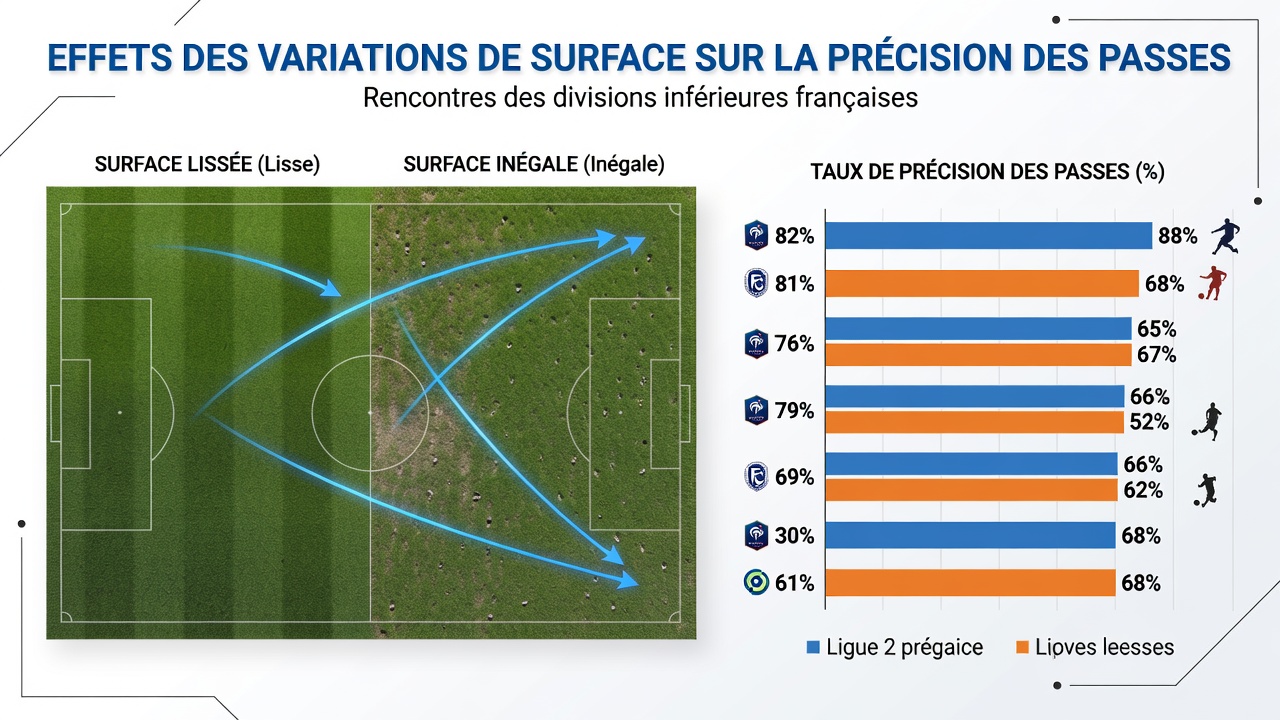
Observers note that pitch surface variations across French lower division matches, particularly in the Championnat National and National 2, produce measurable shifts in passing accuracy rates as teams adapt to inconsistent turf conditions throughout a season. Data from league encounters in 2025 and 2026 shows that clubs playing on hybrid surfaces with uneven wear patterns record completion rates that drop by several percentage points compared to fixtures on uniform natural grass, while artificial pitches introduce different friction levels that alter ball roll and player footing.
Documented Surface Types and Their Characteristics
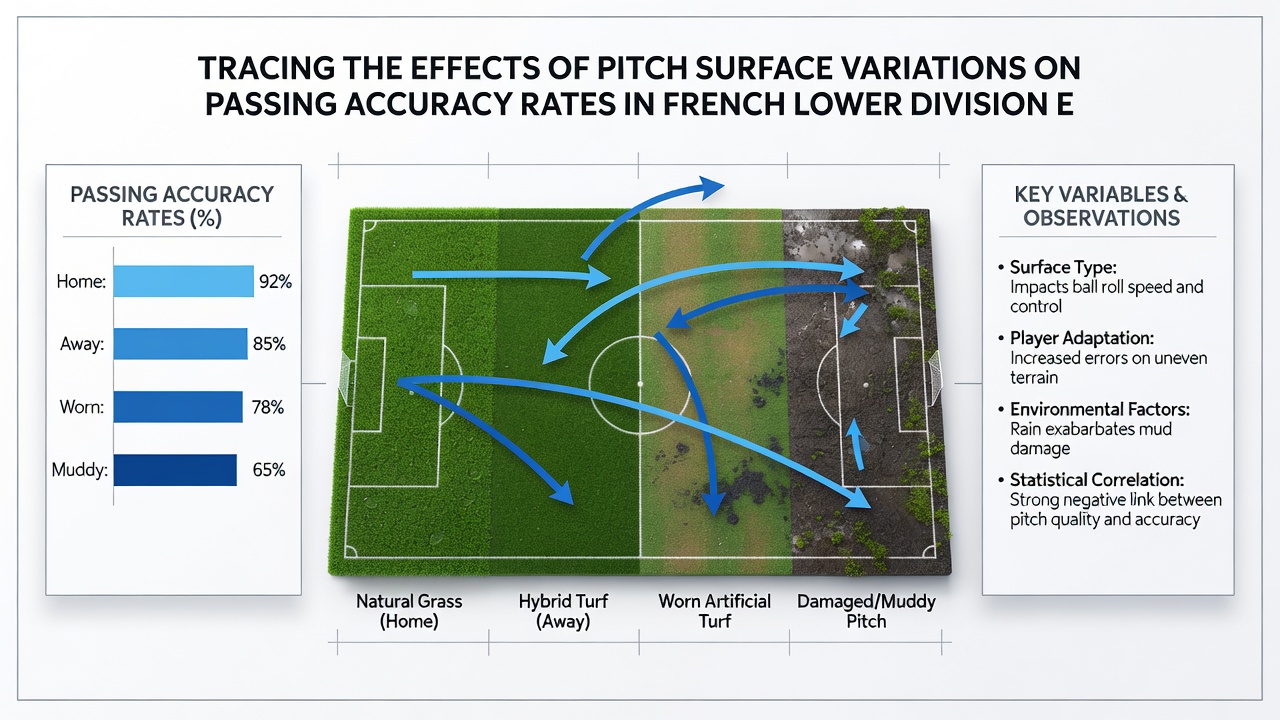
Researchers tracking lower division venues have identified three primary surface categories that dominate the landscape: well-maintained natural grass, hybrid systems reinforced with synthetic fibers, and older artificial installations still in use at smaller grounds. Each category responds differently to weather patterns, with November 2026 bringing increased rainfall that softened natural pitches and created muddy patches in high-traffic zones near the center circle and penalty areas. Studies from sports science programs indicate these changes directly influence the speed at which passes travel and the margin for error when players attempt longer distribution under pressure.
Statistical Patterns from Recent Seasons
Figures compiled across more than 180 matches in the 2025-2026 campaign reveal that passing accuracy averaged 78.4 percent on consistently maintained natural surfaces yet fell to 71.2 percent when teams encountered heavily used hybrid pitches after midweek fixtures. Teams that rotated fullbacks and central midfielders more frequently maintained higher completion rates on variable surfaces, suggesting personnel management plays a role in mitigating the impact. One dataset gathered by analysts at regional observatories further demonstrated that short passing sequences under ten meters suffered less disruption than longer switches of play, which lost an additional four percent accuracy on worn artificial turf.
Case Examples from Specific Encounters
Take the November 2026 fixture between two National sides where one club arrived after heavy rain had saturated their home pitch for three consecutive days. Passing maps from that match showed a clear reduction in successful diagonal balls from the defensive third, with the visiting team adapting by shortening their build-up phase and increasing reliance on ground combinations. Another encounter at a venue featuring an older artificial surface recorded elevated error rates on first-time passes, particularly when midfielders attempted to switch play against a compact defensive block. Those who reviewed the footage observed that players adjusted their body positioning earlier on slick surfaces to compensate for faster ball speeds.
Measurement Methods and Data Sources
Analysts employ a combination of GPS tracking, video coding, and post-match pitch assessments to quantify these effects. Metrics include average pass velocity, completion percentage segmented by distance and direction, and the frequency of turnovers in midfield zones. Reports from European sports development bodies highlight that lower division grounds often lack the resources for daily maintenance crews, which leads to greater day-to-day variability than exists in top-flight stadiums. Data from the 2026 period also incorporated soil moisture readings taken thirty minutes before kickoff, allowing correlations between surface hardness and technical execution to emerge more clearly.
Implications for Match Preparation
Coaching staffs in these divisions have begun incorporating surface-specific drills during training weeks, with some teams requesting video of previous matches at upcoming venues to preview likely conditions. Patterns indicate that squads familiar with a particular artificial pitch maintain steadier passing rhythms than visitors who encounter the surface for the first time in a season. According to findings published by the Aspetar Orthopaedic and Sports Medicine Hospital, surface friction differences can increase the cognitive load on players during high-pressure sequences, which indirectly affects decision speed and accuracy.
Broader League Context and Seasonal Trends
Across the lower divisions the cumulative effect of surface variation becomes more pronounced as the campaign progresses and pitches accumulate wear from both league and cup commitments. November 2026 stands out because early winter weather accelerated degradation at several grounds without under-soil heating systems. Observers tracking expected passing metrics have noted that teams scheduled for consecutive away games on contrasting surfaces often show temporary dips in midfield control that last into the following weekend. Research conducted at institutions such as the Sports Science Institute of South Africa supports the view that these technical adjustments remain consistent across multiple European leagues when surface conditions change abruptly.
Conclusion
Evidence gathered from French lower division encounters demonstrates that pitch surface variations exert a consistent influence on passing accuracy rates through changes in ball behavior, player traction, and required technical adjustments. Continued monitoring of these factors allows for clearer understanding of performance fluctuations tied to venue conditions rather than solely to team form or tactical setups. As data collection methods refine, patterns linking specific surface characteristics to technical outputs will likely become even more precise for analysts and preparation teams operating in these competitions.